
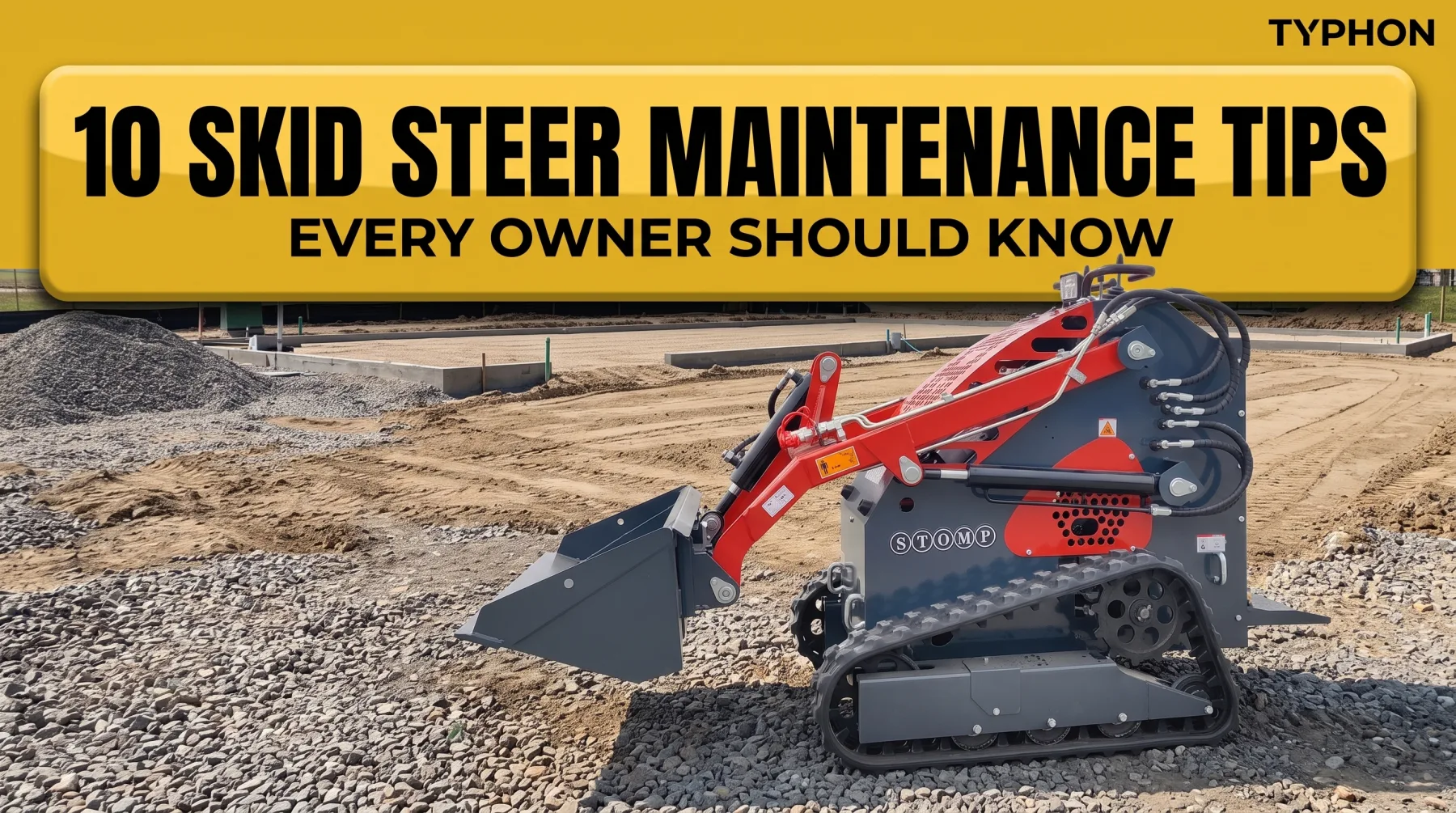
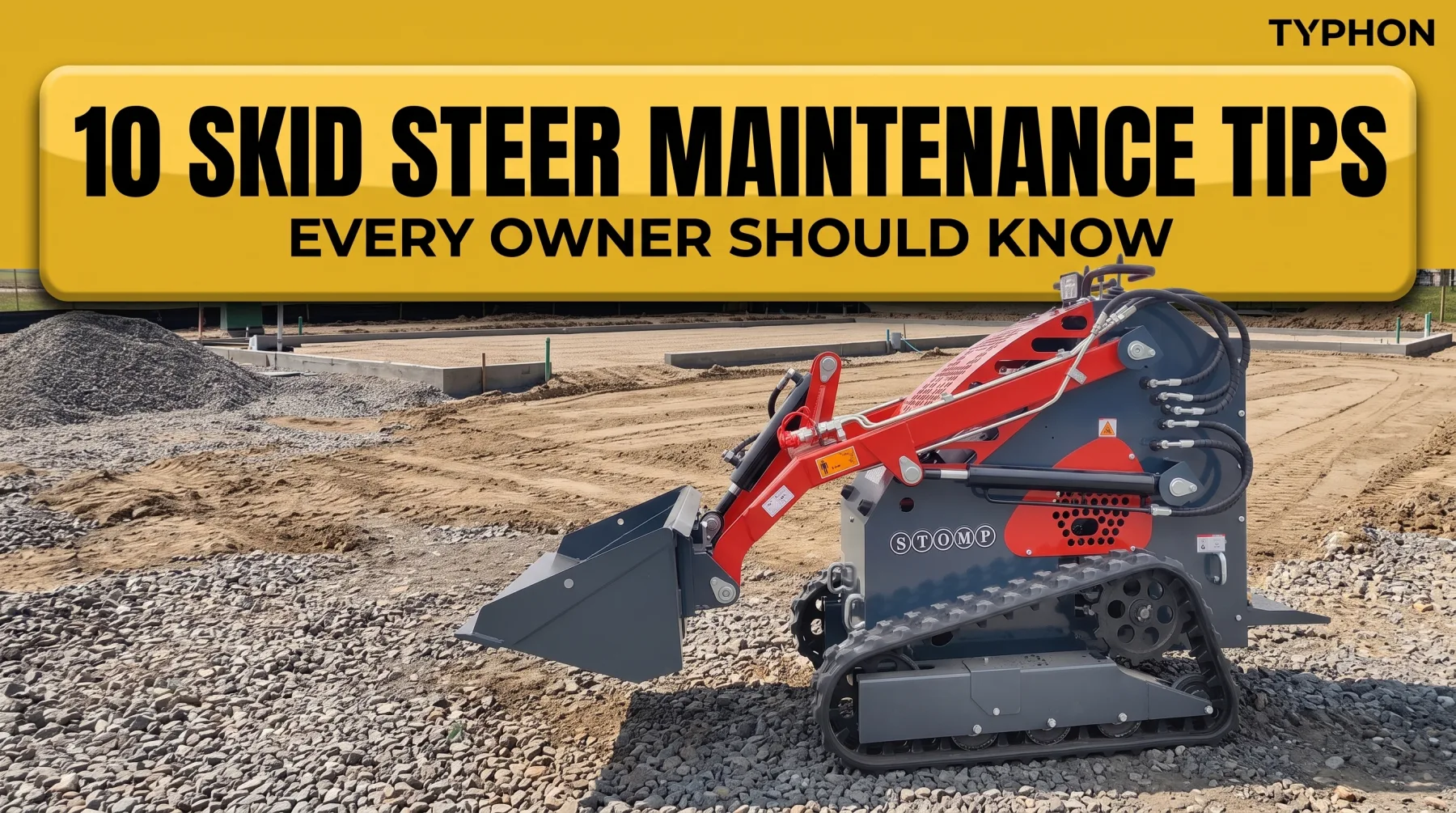
10 Skid Steer Maintenance Tips Every Owner Should Know
The skid steer had been the hardest-working machine on the lot, moving gravel, grading pads, and clearing debris for months without complaint. So when the operator noticed the tracks felt a little sluggish and the loader arms lifted a touch slower one morning, he chalked it up to a cold start and kept pushing. Two days later, mid-grade on a paying job, the hydraulics gave out entirely. A quick look under the machine told the story: a hydraulic fluid level that had been slipping for weeks, a filter no one had changed, and a system that finally overheated and blew a seal. The repair cost more than a full season of routine service, and the machine sat dead for a week while a client waited and the schedule unraveled. That kind of loss almost never comes from bad luck. It builds from small maintenance tasks that quietly slid off the calendar until a cheap fix became an expensive failure. A skid steer is a compact powerhouse built to take punishment, but that toughness only lasts when the care behind it stays consistent. Skip the basics, and you trade a few minutes of daily attention for days of downtime and a drained repair budget. Stay ahead of them, and the same machine runs strong for thousands of hours and holds its value for years. This post lays out ten practical maintenance tips every skid steer owner should know, organized so you can put them to work right away. You’ll find the daily habits that catch trouble early, the fluid and hydraulic care that protects the machine’s power, the tire, track, and attachment upkeep that keeps it moving and working, and the scheduled service discipline that sustains reliability over the long haul. Master these, and your skid steer earns its keep shift after shift.
Daily Habits That Catch Problems Early
The costliest skid steer failures usually give warning long before they strike, and the operators who catch those signals are the ones running a short routine every single shift. Making these first three tips automatic is the cheapest insurance you can buy against unplanned downtime.
Tip 1: Run a Pre-Shift Walk-Around Every Time
Circle the machine before the first task and look for anything that’s changed. Fresh oil or coolant puddles beneath the skid steer, damaged or weeping hoses, loose fittings, and cracks on the frame or loader arms all point to trouble worth catching in the yard rather than mid-job. A leak spotted at 7 a.m. is a quick fix; the same leak found during a paying job is a stalled machine and a frustrated client. Build a simple, repeatable routine so nothing gets missed. A solid skid steer daily inspection checklist covers fluid levels, tire or track condition, the lift arms and coupler, and the safety gear before the engine even warms up. Test the lights, backup alarm, seatbelt, and safety devices too, since these protect both the machine and everyone working around it.
Tip 2: Watch the Gauges and Listen to the Machine
Once the skid steer is running, let it tell you how it feels. Watch the temperature and pressure gauges during warm-up, listen for unusual noises from the engine or hydraulics, and note any hesitation in the lift arms or drive response. These early signals are the machine flagging a problem while it’s still small and cheap to address. Treat every warning light and odd sound as a decision point rather than something to power through. A rising temperature, a new whine, or a sluggish lift caught early almost always costs far less than the failure it precedes. Tag any machine that isn’t safe to run instead of gambling a whole shift on it.
Tip 3: Keep the Machine Clean
Dirt is more than cosmetic on a skid steer. Mud, debris, and material buildup trap heat, hide developing leaks and cracks, and clog the cooling system that keeps the engine and hydraulics from overheating. A machine caked in grime is a machine whose problems you can’t see until they’ve grown. Clear debris from the engine compartment, cooling package, and undercarriage regularly, more often on dusty or muddy sites. A quick cleaning at the end of a shift keeps radiators breathing, makes the next inspection honest, and prevents the slow buildup that quietly strains components. Takeaway: a consistent walk-around, close attention to gauges and sounds, and a clean machine catch the majority of failures before they strand you, so make these three daily habits non-negotiable.
Fluid and Hydraulic Care That Protects Power
Nearly everything a skid steer does — lifting, driving, steering, and running attachments — depends on clean fluid at the right level. Let the fluids slide, and the machine loses power, wears from the inside, and eventually quits mid-job. These tips protect the systems that do the real work.
Tip 4: Check and Change Fluids on Schedule
Inspect the engine oil, hydraulic fluid, coolant, and fuel level daily, and top off anything low with the correct type. Running a skid steer short on fluid is one of the fastest ways to cause expensive internal damage, and it’s entirely preventable with a thirty-second look. Never mix fluid types, since the wrong blend degrades performance and can ruin seals. Cleanliness counts as much as level. Change fluids and their filters on the manufacturer’s schedule to keep contaminants like dirt, water, and metal particles out of the system. Milky or dark fluid, a burnt smell, or a level that keeps dropping between checks all signal a problem worth chasing down before it becomes a pump or engine failure.
Tip 5: Protect the Hydraulic System
The hydraulic system is the muscle of a skid steer, powering the loader arms and every attachment you run, so guard it closely. Inspect the hoses, fittings, and cylinders regularly for cracks, bulges, soft spots, and weeping, and replace a suspect hose before it bursts. A blown hydraulic line sprays hot fluid under pressure, which is both a safety hazard and an instant end to the workday. Learn the hydraulic system wear signs so you can act early: slow or weak lifting, jerky arm movement, unusual pump noise, or attachments that run without their usual power. Catching an issue while it’s still a fluid or filter fix beats replacing a failed pump mid-season. Healthy hydraulics are what keep the machine strong and responsive load after load.
Tip 6: Keep the Cooling System Clear
An overheating engine or hydraulic system is a fast path to serious damage, so keep cooling in good order. Check the coolant level regularly and keep the radiator and cooling fins free of the dust, chaff, and debris a skid steer constantly kicks up. A clogged cooling package on a hot day can push the machine past its limits before the operator even notices the temperature climbing. Clean the cooling system on a schedule matched to your conditions, and stop the moment the temperature gauge climbs abnormally. A few minutes clearing debris prevents the kind of overheating that warps components and ends a machine’s day. Takeaway: clean and full fluids, a well-guarded hydraulic system, and a clear cooling package protect the skid steer’s power and prevent its most expensive failures, so treat fluid care as the foundation of your routine.
Tires, Tracks, and Attachments That Keep It Working
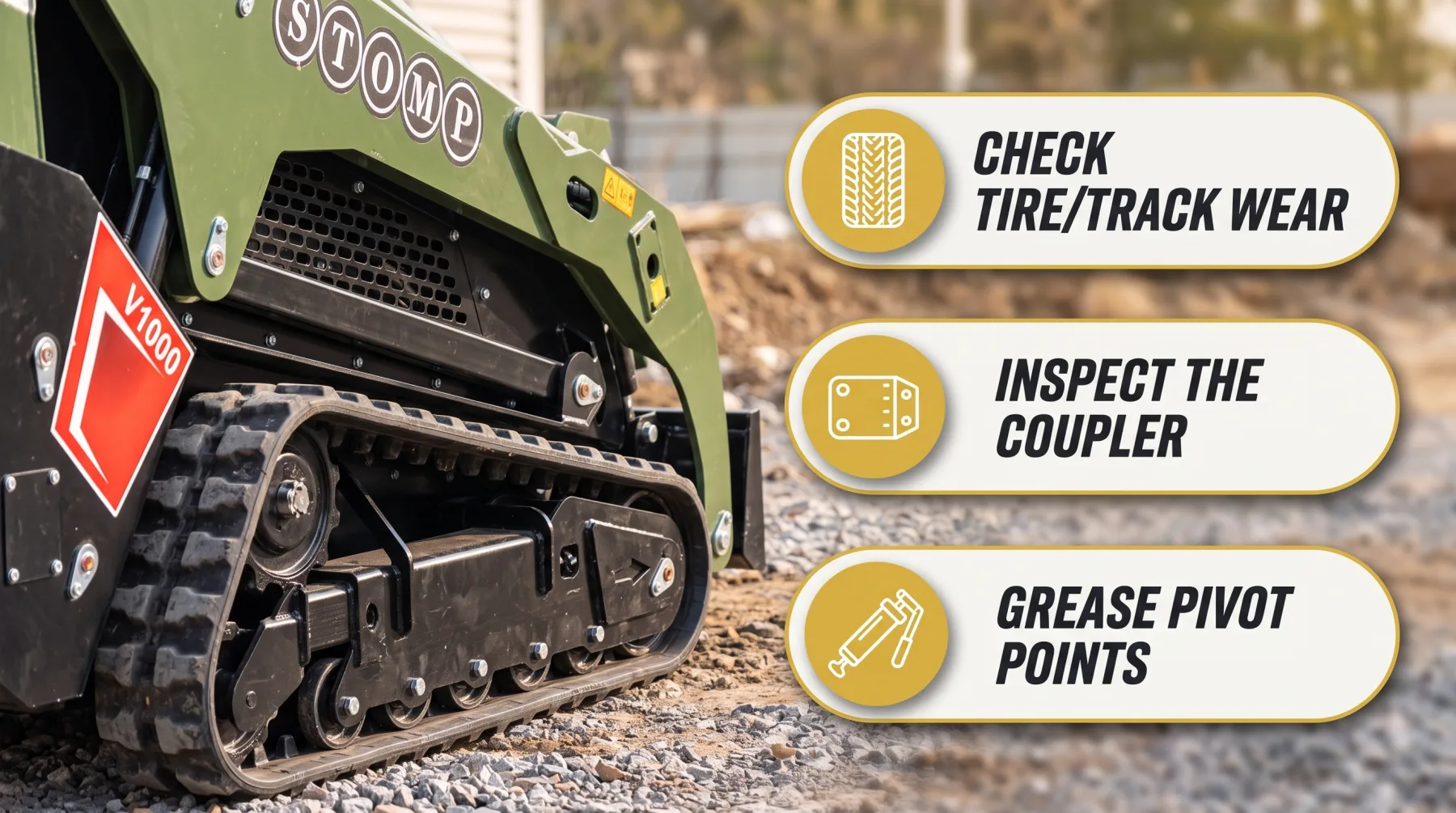
A skid steer earns its living moving across rough ground and switching between tools all day, and that punishes the tires or tracks it rides on and the coupler that connects its attachments. Neglect here leads to poor performance, uneven wear, and pricey repairs. A little routine attention keeps the machine planted and productive.
Tip 7: Maintain Tires or Tracks
Tires and tracks are a major expense, so protect them daily. On wheeled machines, check the tire pressure and look for cuts, uneven wear, and embedded debris, since a soft or damaged tire hurts stability, traction, and fuel economy while pulling the machine to one side. Keep all four at the manufacturer’s spec, because uneven pressure wears components faster than it should. On tracked machines, inspect the rubber tracks for cuts, missing lugs, and correct tension. A track that’s too loose can derail, while one that’s too tight wears the undercarriage and drive components prematurely. Clear packed mud and debris from the undercarriage regularly, and address damage early to stretch the life of whichever running gear your machine rides on.
Tip 8: Grease Every Pivot Point
A skid steer carries numerous pivot points across the loader arms, linkage, and coupler, and every one needs regular grease. Dry pins and bushings wear rapidly under load, developing play that spreads to surrounding parts and turns a cheap greasing habit into an expensive repair. Follow the greasing schedule without shortcuts. Make greasing a fixed part of the routine rather than an afterthought. Hit every fitting on schedule, wipe away old grease and grit first, and use the grease the manufacturer specifies. This one habit prevents a huge share of the wear that quietly degrades a machine over time.
Tip 9: Inspect and Maintain the Attachment Coupler
The quick-attach coupler is what makes a skid steer so versatile, so keep it in top shape. Inspect the coupler plate, locking pins, and mounting surfaces for wear, cracks, and bent components, and confirm the pins engage fully every time you connect a tool. A worn or improperly latched coupler can drop an attachment, damaging the tool and endangering anyone nearby. Keep the coupler clean and its moving parts lubricated so tools seat and lock reliably. When you run hydraulic attachments, check the auxiliary couplers and lines for leaks and secure connections too. Takeaway: disciplined tire or track care, regular greasing, and a well-maintained coupler protect the systems that keep a skid steer moving and working, so never let these heavily stressed parts go neglected.
Scheduled Service That Sustains Reliability
Daily habits handle the immediate problems, but long-term reliability depends on planned service. A skid steer rewards discipline with thousands of dependable hours and punishes neglect with the kind of major failures that end a machine’s working life early. These final tips are where consistency pays the biggest dividends.
Tip 10: Follow the Manufacturer’s Service Intervals
Every skid steer comes with recommended service intervals based on engine hours, and following them closely is the surest route to reliability. Filter changes, oil and fluid changes, and system inspections all fall on scheduled hours for a reason: they replace worn parts and tired fluids before failure, not after. Skipping intervals to keep a machine running is a false economy that trades a small routine cost for the risk of a catastrophic repair. Track hours with the hour meter rather than relying on the calendar or memory, since a hard-working machine reaches its service points faster than one running light. Replace filters on time too, because a dirty air filter starves the engine and a neglected hydraulic filter lets contaminants reach the parts they protect. Staying on schedule keeps the engine, drivetrain, and hydraulics running efficiently for the long haul.
Keep Records and Stock the Right Parts
Track your maintenance instead of trusting memory. A simple log of hours, fluid and filter changes, inspections, and repairs tells you what’s due and helps you spot patterns before they become failures. Good records also protect resale value by proving the machine was cared for properly. Keeping the right filters, fluids, and wear parts on hand means you can service on schedule without delay. A stocked shelf turns maintenance from a scramble into a routine, which is exactly how the most reliable operations run their equipment.
Know When to Call a Professional
Routine tasks like fluid checks, greasing, filter changes, and visual inspections sit well within an operator’s reach. But complex hydraulic, drivetrain, electrical, or structural issues are best handled by a qualified technician before they worsen, and leaning on dependable support keeps a small problem from becoming an emergency. Don’t gamble a machine on a repair beyond your tools or training. Calling for help early, while an issue is still small, almost always costs less than waiting for it to become a mid-shift breakdown. Takeaway: following service intervals, keeping solid records with the right parts on hand, and knowing when to call a professional sustain reliability across thousands of hours, so treat scheduled service as the backbone of a machine that keeps earning.
Frequently Asked Questions
How often should I perform maintenance on a skid steer?
Follow the intervals in your operator manual, which are based on engine hours rather than the calendar. Daily checks of fluids, tires or tracks, the coupler, and a visual walk-around should happen every shift, while greasing pivot points is often a daily task. Filter changes, oil and fluid changes, and deeper inspections fall on scheduled hour intervals. Because a hard-working machine reaches its service points faster, always let the hour meter guide your timing.
What are the most important daily checks on a skid steer?
Start with a walk-around for leaks, damaged hoses, and cracks, then confirm the fluid levels for engine oil, hydraulics, coolant, and fuel. Inspect the tires or tracks for pressure, tension, and damage, check the coupler and its locking pins, and clear debris from the cooling package. Finally, watch the gauges during warm-up and listen for unusual noises. These few minutes catch most problems before they turn into breakdowns.
Why is greasing a skid steer so important?
A skid steer has many pivot points across the loader arms, linkage, and coupler, all working under heavy load. Without regular grease, the pins and bushings wear rapidly, developing play that spreads to surrounding parts and leads to expensive repairs. Greasing every fitting on schedule, after wiping away old grease and grit, protects these heavily stressed joints and keeps the machine lifting and connecting smoothly for years.
How do I keep my skid steer from overheating?
Keep the cooling system clean and full. Check the coolant level regularly and clear the radiator and cooling fins of the dust, chaff, and debris a skid steer constantly kicks up, cleaning more often on dusty sites. Also clear packed material from the engine compartment and undercarriage, since trapped debris holds heat. Watch the temperature gauge during operation and stop if it climbs, since overheating can warp components fast.
When should I call a professional instead of doing it myself?
Routine tasks like fluid checks, greasing, filter changes, and visual inspections are well within an operator’s reach. But complex hydraulic, drivetrain, electrical, or structural issues, along with persistent warnings or unusual behavior you can’t diagnose, are best handled by a qualified technician. Calling for help early, while a problem is still small, almost always costs less than waiting for it to become an emergency repair in the middle of a job.
Conclusion
Keeping a skid steer reliable comes down to consistent habits rather than complicated work, and these ten tips form a routine any owner can follow: run a pre-shift walk-around every time, watch the gauges and listen to the machine, keep it clean, check and change fluids on schedule, protect the hydraulic system, clear the cooling package, maintain the tires or tracks, grease every pivot point, inspect the attachment coupler, and follow the manufacturer’s service intervals while keeping solid records and knowing when to call a professional — none of it is difficult, but all of it matters, because the machines that work hardest and last longest are the ones whose owners never skip the basics, so take an honest look at your maintenance routine before the next shift and tighten up wherever it has slipped, since the few minutes you invest today are exactly what keep the machine earning tomorrow, and if you’d like help choosing a dependable skid steer or sourcing the parts and support to keep yours running strong, reach out to a trusted equipment specialist who can pair dependable equipment with the results your projects depend on.